


Picture a young Jeremy. Braces glistening in the sunlight. A black Terrell Owens jersey twice his size. A pepperoni pizza hot pocket in one hand and eyes fixed on the television like an old retainer stuck to the roof of your mouth. All while taking in the chaotic euphoria of the Philadelphia Eagles defense. A shape-shifting defensive force that felt messy and uncoordinated until it hit you like a hammer.
A blur of confusion that hid its intention like a Nathan Fielder project or a conversation with your mom at Thanksgiving. A swarm of defenders would collapse time and space to meet the quarterback from every angle. A sweet symphony of resistance conducted by Jim Johnson, the legendary defensive mastermind Andy Reid chose to join him in Philadelphia. I’d sit inches from my parents’ TV watching Brian Dawkins turn Alge Crumpler into an accordion or see Jevon Kearse teleport past an offensive lineman with arms long enough to wrap around the moon.
In 2009, Johnson passed, and the Eagles handed the reins to a young linebackers coach who was on the cusp of coordinating his first defense. Despite doing his best Johnson impression, the young first-time coordinator didn’t have the same answers. It’s hard to adjust to life as a defensive coordinator, but it’s even harder to fill the well-worn shoes of a legend. After two seasons of underperformance, Andy Reid fired the coordinator and instead hired his old offensive line coach to run the defense (but that’s a shitshow for another screen). The coordinator went to Carolina and crafted a defense that led the Panthers to a Super Bowl appearance. His success earned him the head job in Buffalo, where he had the highest winning percentage of any coach in franchise history.
There’s a lesson in Sean McDermott’s story. One that the eight defenses and six offenses employing first-time playcallers this season are hoping to learn. Thus far, for most of them, things have gone as smoothly as telling your family you’re getting married at an Arby’s.
Four out of six new first-time offensive playcallers rank in the bottom half of the league by EPA/Play. The only first-time playcaller to improve their offense was Brad Idzik, the Panthers offensive coordinator who has been on the staff for 3 seasons and is calling plays for the first time this year. He’s taken Carolina from 26th in EPA/Play all the way up to 11th. No, I’m not jealous, why do you ask (wipes tears with Saquon Barkley jersey)? Meanwhile, Davis Webb had his playcalling revoked in Denver in Week 5, Seattle is regressing, and Philadelphia is on fire (in a bad way).
Recent history doesn’t bode well for contenders looking to win it all in their first year with a first-time offensive coordinator. Out of the 49 first-time offensive coordinators hired between 2016 and 2025, only 15 made the playoffs in their first year, with one reaching the conference championship (Arthur Smith with the Titans in 2020), and none making it to the Super Bowl.
On defense, the results haven’t been much better. Aside from Buffalo’s Jim Leonhard and Cleveland’s Mike Rutenberg (finally, a nice thing to say about the Browns), the other 6 new first-time defensive coordinators are calling bottom-half defenses by points per drive allowed. Eight teams that were considered preseason contenders (Philadelphia, Washington, Dallas, Buffalo, Baltimore, Carolina, New England, and Seattle) are hanging their hopes on a first-time offensive or defensive playcaller (or both if you’re Baltimore or Washington). Six of those teams have incumbent coaches who are replacing their old coordinators (cough cough, Kevin Patullo) with a shiny new one.
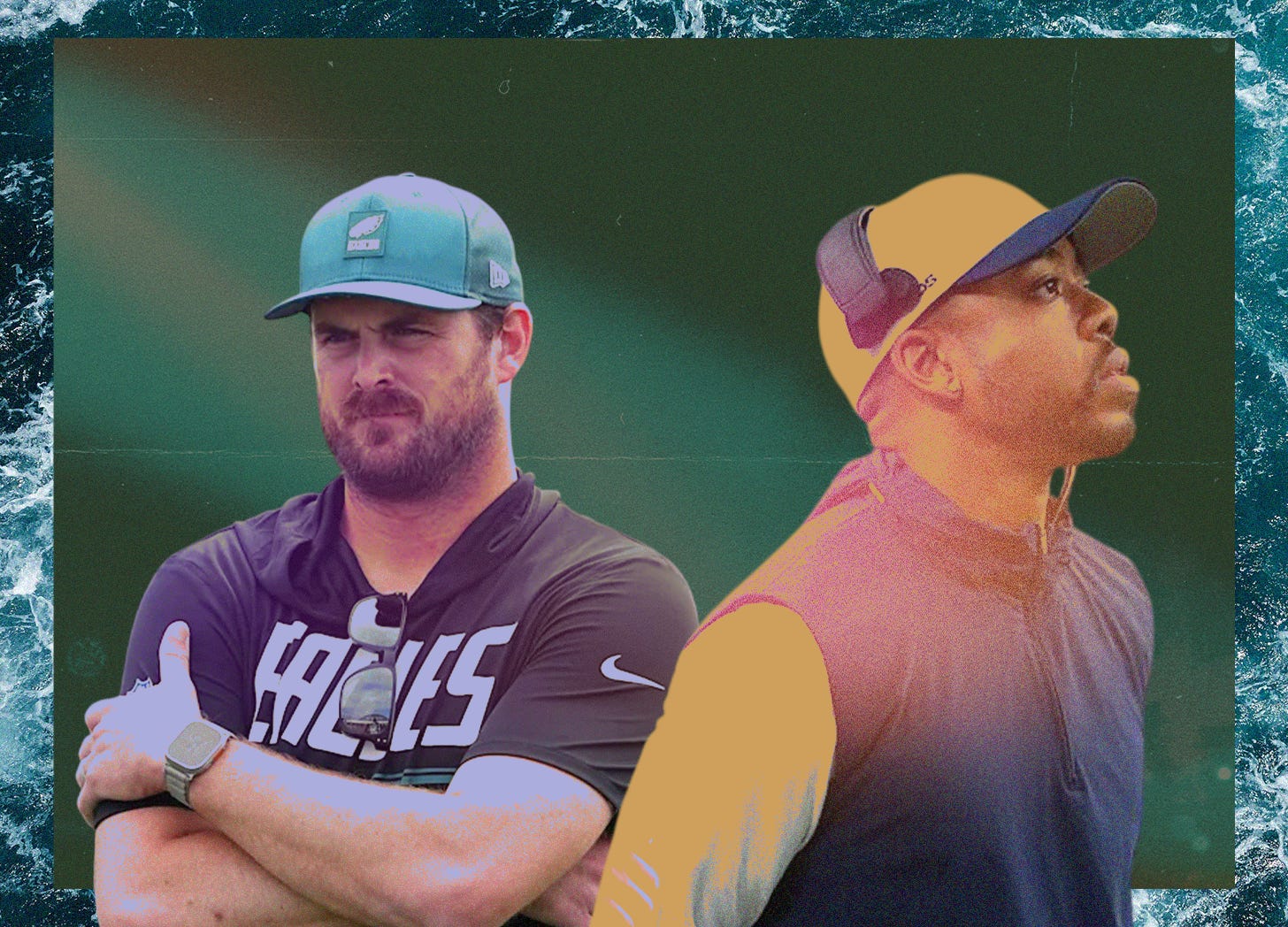
Amid all of the angst and underperformance around these first-time coordinators, two dumpster fires from rival teams remain supreme: Christian Parker’s Dallas Cowboys defense and Sean Mannion’s Philadelphia Eagles’ offense. Both are the worst units in the league, best described by words like “ewww” or “damn,” said while slowly shaking your head and staring out of the window. Dallas just announced that they are revoking Parker’s playcalling duties, which is like your boss saying they’d like to keep you on staff but you’re not allowed to email anyone. Meanwhile, Mannion’s Eagles’ offense is littered with injuries and miscommunication, leaving the wreckage of my mental health in its wake.
But should we have expected this from Mannion and Parker? Should we give first-time coordinators a little bit of grace for not performing immediately? And, if the Eagles and the Cowboys both thought of themselves as contenders, then why did they hire inexperienced playcallers? To evaluate, I looked at first-time offensive coordinators and defensive coordinators hired in the last decade.
Sean Mannion and the Fruitless Matt LaFleur Coaching Tree
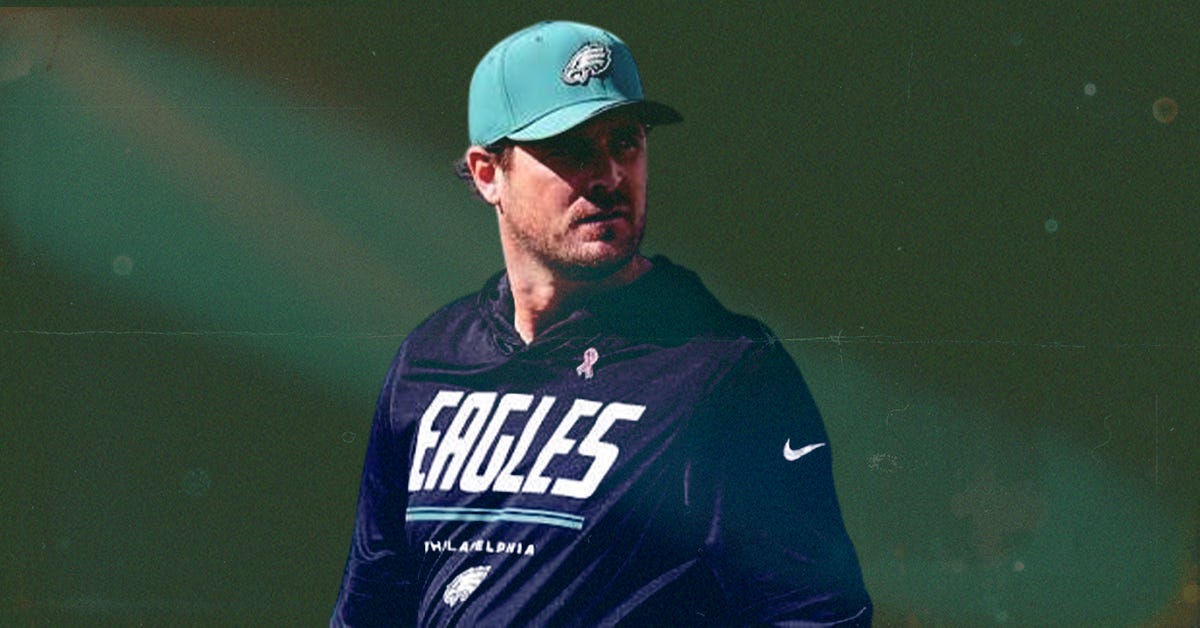
Anyone who’s watched an Eagles game this season knows what true pain looks like. The Eagles’ offense is like watching Sisyphus roll a boulder up a hill, but the hill is also made of quicksand. It’s watching Joe Milton drop back and whip a ball faster than a bullet train 10 feet over Makai Lemon’s head or witnessing Landon Dickerson usher a defender directly into Saquon Barkley. The Eagles’ offense ranks 31st in the league by EPA/Play and is a real tumbleweed of sadness.
For first-time offensive coordinators hired since 2016, Mannion has led the third-largest EPA/Play drop-off in his first year, next to Steve Sarkisian’s Atlanta Falcons and Josh Grizzard’s Tampa Bay Buccaneers (who, ironically, is the passing game coordinator for the 2026 Eagles). To quote the band Bad Company, that’s “BAAAD COMPANYY.” That’s an outlier in a very bad way.
But for Mannion to be a slam dunk in his first season, he would’ve also had to be a bit of an outlier. Among first-time offensive coordinators hired since 2016 with fewer than three years of experience, only 2 of 11 (18%) improved the previous-year EPA/Play compared to 22 of 36 first-time coordinators with more experience (61%). In fact, 8 of 11 coaches from that sample were hired by incumbent head coaches (rather than new head coaches joining the team). Only 1 of those coaches (Kellen Moore in his first season with Dallas) improved his team’s EPA/Play from the previous season in his first year, and he was an internal hire after being promoted from quarterbacks coach. According to the same data set, first-time coordinators who are internal hires by incumbent coaches tend to perform better in their first year than external hires.
In the Sirianni era, the Eagles tried both internal promotions and external hires. Both internal hires fielded underperforming offenses, although Brian Johnson’s offense ranked 8th in EPA/Play (justice for Brian Johnson!) and Kevin Patullo’s was (checks notes) somehow 17th in the league last year by EPA/Play. Kevin Patullo is currently reading this and shed a single tear of joy.
Big Sean comes from the Matt LaFleur coaching tree, which has produced two other standouts of mediocrity: former Green Bay quarterbacks coach turned Chicago Bears offensive disastermind Luke Getsy and Justin Outten, former offensive coordinator for the Nathaniel Hackett Denver Broncos who didn’t call plays. Fun fact: when shit hit the fan in Denver, and Nathaniel Hackett decided he shouldn’t call plays anymore, he gave playcalling to his quarterbacks coach (and future Super Bowl-winning coordinator) Klint Kubiak instead of Outten. Big yikes!
The LaFleur coaching tree is a fruitless branch of the vaunted Shanahan/McVay coaching tree. But since 2016, no first-time coordinators from the Shanahan or LaFleur trees have finished in the top 10 in EPA/Play in their first season.
One difficulty for Mannion is the number of injuries he’s had to reckon with, including the loss of DeVonta Smith, Dontayvion Wicks, and Landon Dickerson for multiple games, along with the season-ending blood clot situation that Jalen Hurts is dealing with (#1 in our programs and #1 in our hearts). It’s hard to run your preferred system when your team is more beat up than a South Philly Nissan Altima. But first-time offensive coordinators like Declan Doyle of the Baltimore Ravens and David Blough of the Washington Commandos (Commies? Manders?) have more offensive starter games missed and still manage to run offenses with a higher EPA/Play this season (both are around the middle of the pack). I’d give my left kidney for a middle-of-the-pack offense. The Packers made an offensive line in a cave out of a box of scraps and have a top-ten offense by EPA/Play.
Throw into the pot the fact that Nick Sirianni has a 55% win percentage and two wild card losses when running with first-time OCs versus a 60% win percentage and two Super Bowl appearances (1 win) with an experienced offensive coordinator. In this lost season, it makes sense for the Birds to practice patience and see if Mannion can develop with lower expectations. But the idea of bringing him in to turn around an underperforming offense in one season felt a little shortsighted. Especially in a pivotal year for Sirianni.
Mannion’s offense has been historically bad, and if he grows into an excellent playcaller, it would be a seismic turnaround for his young career. He’s a well-respected offensive mind who connects with his players. The question always has been whether or not Philadelphia is the right place for him to grow.
Christian Parker Ran Out of Time
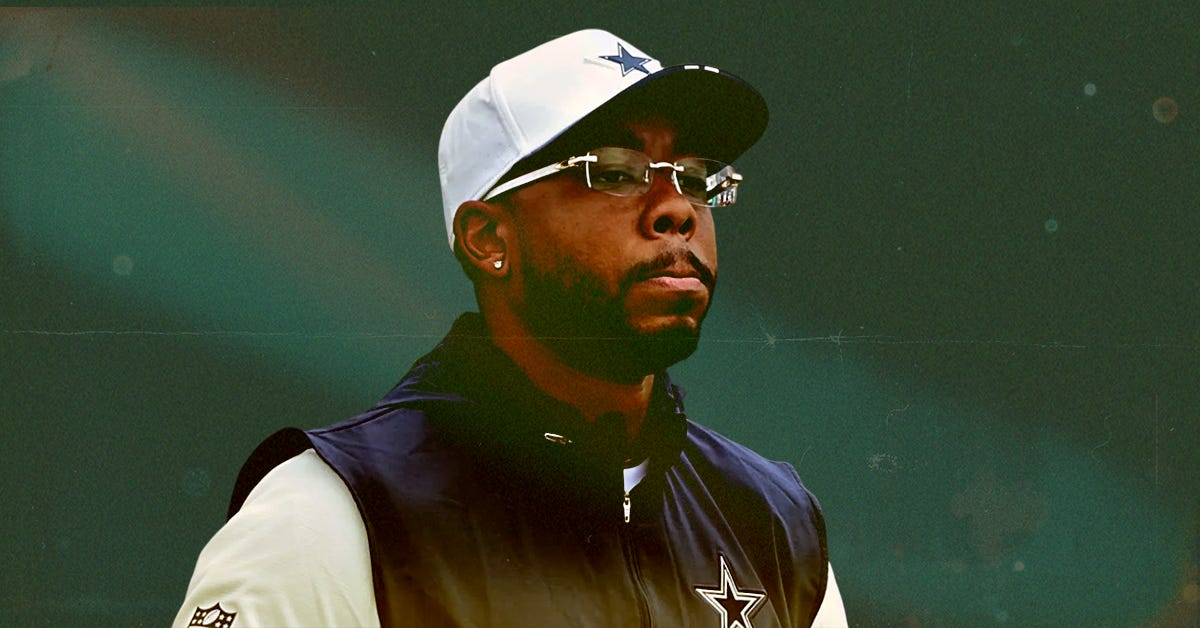
I will use every chance I get to talk about how I hate the Cowboys. Jerry Jones looks, talks, and acts like an old sock. But admittedly, I have a soft spot for defensive coordinator (although now more defensive than coordinator) Christian Parker. So many players spoke highly of him in Philly that it was cool to see him get his shot. But I’m not going to lie to you or myself; it’s been kind of cool to see the Cowboys be so awful.
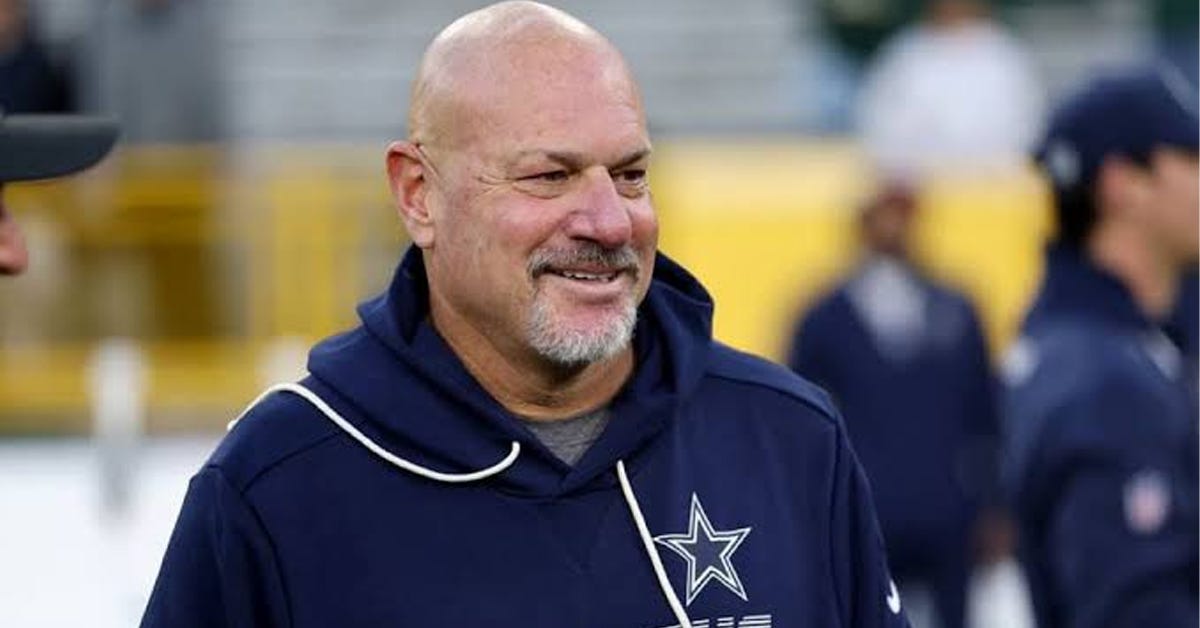
This week, the Cowboys soft-fired Christian Parker by handing over game-day playcalling duties to a notable old dude with a goatee, Mike Pettine. Mike Pettine looks like an alternate-dimension Stone Cold Steve Austin. Mike Pettine looks like the owner of a biker bar that strictly plays ZZ Top on the jukebox. Mike Pettine looks like a backyard wrestling promoter who lives above a Chili’s in Tucson.
Given how sideways this season has gone, it’s fair for Dallas to make a change. Parker’s Cowboys defense is last in the league in most metrics. At first glance, you could make a case for hiring Christian Parker. Among first-time defensive coordinators hired since 2016, external hires produced more top-ten defenses than internal promotions. Parker comes from the Vic Fangio coaching tree and played a major role in Philadelphia’s defensive success in the past few years. He’s beloved by players and fellow coaches. But was it fair to expect a first-time defensive coordinator to resurrect the Cowboys defense whose preferred style of play is “letting the other team score”?
Most first-time defensive coordinators struggle in their first season. 17% of first-time defensive coordinators hired in the last decade produced top-ten defenses by points per drive allowed, whereas 44% produced bottom-10 units.
The Fangio tree, much like the LaFleur branch (where my botany heads at!), has been as successful as Rihanna responding to your DM. The outlier is Brandon Staley, who in one season with the Los Angeles Rams in 2020 became America’s Sweetheart after producing a top-ten defense. In 2022, Ejiro Evero became the only other Fangio disciple (Friends of Fangio? Bend-But-Don’t-Breakers? Vic Picks?) to lead a top-ten defense in his first year as a defensive coordinator. The other four bums (Sean Desai in Chicago, Clint Hurtt in Seattle, Joe Barry in Green Bay, and Christian Parker) ranked 24th or below in points allowed per drive. Side note: Can’t believe Nick Sirianni saw Desai’s Chicago defense and said, “Sign me up for that pain.”
For first-time defensive coordinators hired in the last decade, most produce a defense that ranks similarly to the year prior. Last year, the Cowboys ranked 30th in total defense. This year, they’re 32nd. Counting on Parker to elevate a poor defense in his first year was always a tall order.
Finding the right coach is as hard as it is nuanced. Most coaches are a product of their environment, especially early in their careers. In his first season in Washington, first-time offensive coordinator Sean McVay’s offense was 26th in points per game and 13th in yards per game. In his first season in Houston, first-time coordinator Kyle Shanahan’s offense was middle of the pack in points per game.
Not every coach can be Ben Johnson coming out of the gate. Young coaches take time to develop. Time that some situations on contending teams can’t afford. As fans, it’s fair for us to not adjust our expectations. But team leaders should be honest about what young coaches can contribute and how to either support them in their growth or find a coach that better fits their timeline. Mannion notably has no veteran offensive coaches on staff to help him learn and grow. The Cowboys brought in Parker’s old colleague to help him out before he snatched the job away like Robert Pattinson.
So, NFL coaches and general managers, think before you hire an inexperienced coordinator to lead your team to the promised land. Unless you’re the Dallas Cowboys, keep doing your thing.


This was excellent. I have to assume it’s more thorough and comprehensive thinking than most teams put into their hiring processes.
There’s probably some selection bias in that team’s hiring new coordinators may have known their units weren’t that good, but the numbers are still pretty stark.
I wonder what the right way to integrate a new play caller is — because the McDermott example shows that maybe some of these hires are good, they’re just early.