


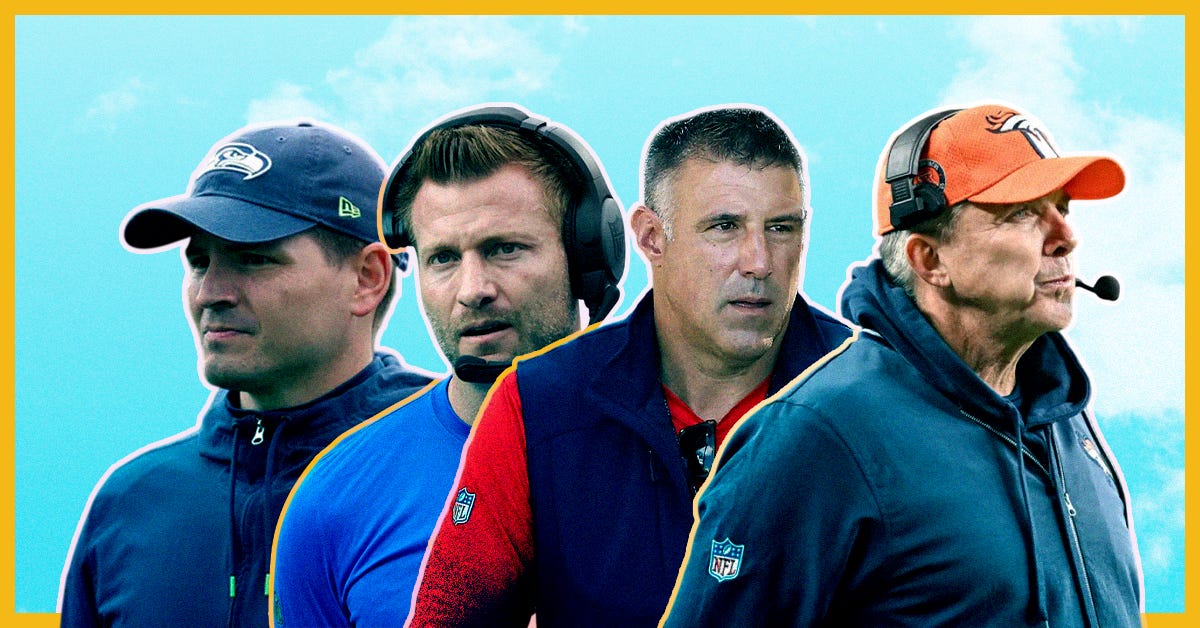
NFL Championship Weekend is the convergence of two realities. There’s the reality of the haves and the reality of the have-nots. Two separate planes flattening within a single thread of space and time to light your Twitter feed on fire. In one reality, this weekend touts the successes of four teams who sit one win away from their chance at Super Bowl immortality. In the other reality sits a revolving door of self-reflection and a search for answers.
Since the end of the regular season, almost a third of the league fired its head coaches and begun looking for a new leader to take their team to the promised land. Sometimes teams can treat the head coaching search like collecting a rare baseball card or like Arnold Schwarzenegger hunting for a Turbo Man toy in Jingle All the Way. They reach for the shiny thing, with arms outstretched for the next hot up-and-coming play caller or the retread head coach who took their old team far, but could take a new team further (see: this Arrested Development scene). They let the market dictate the value of a candidate rather than assessing that value against what’s best for their specific set of circumstances.
It’s all because most teams know that hiring the right coach can be an elevator. It can take an organization with a solid foundation (good leadership structure, sound decision-making, stable ownership) to the next level. But hiring the wrong coach can be a mirror, reflecting all of the flaws, bad processes, and toxicity inherent in an organization (*cough cough* Cleveland Browns). Every Freddie Kitchens, Joe Judge, Joe Philbin, and Adam Gase is a direct reflection of the organization that put them in the position to lead, to begin with.
Team owners, new general managers, or wayward executives in need of someone to save their jobs will look at media-perpetuated head coaching archetypes. The young offensive playcaller. The experienced head coach who’s been there before. The hard-nosed defensive mastermind. The coaching carousel is a cyclone. Most teams are looking for a safe place to land, knowing that the wrong spot could toss them back into the storm again.
But if there’s anything to learn from the final four teams, it’s that a successful head coach can look a lot of different ways. The one thing that unites the four remaining head coaches is that they don’t cleanly fit into any archetype. They are nuanced and complicated. It’s not the cloth they’re cut from but the quality of their leadership that resonates.
Sean Payton, Mike Vrabel, Sean McVay, and Mike MacDonald are a heartbeat away from Super Bowl LX. As coaches, these four couldn’t be more different in the roads they took to get here. But they are similar in their ability to connect with the teams they lead. They show that a good head coach can come from a lot of different places, but strong leaders are hard to find.
The Old School Quarterback Whisperer
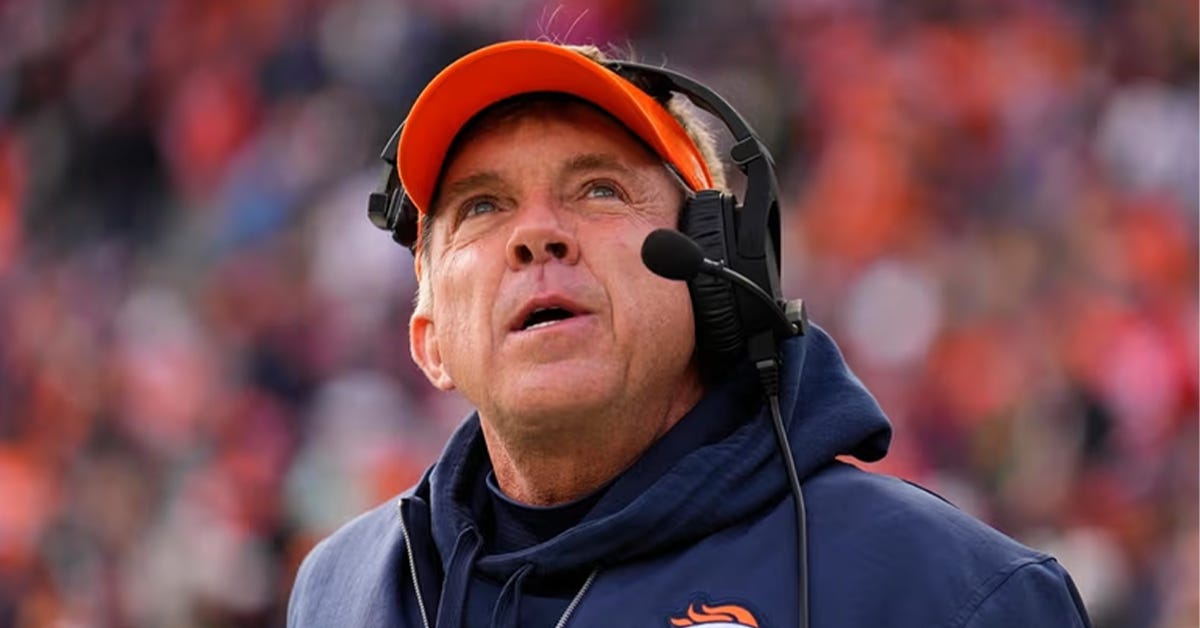
As Hall-of-Fame head coach Bill Parcells once said, “I think confrontation is healthy, because it clears the air very quickly.” That’s a lesson Broncos head coach Sean Payton took to heart. Payton is a part of the legendary Bill Parcells coaching tree, a highly esteemed club of coaches such as Bill Belichick, Tom Coughlin, Jim Fassel, and Todd Bowles.
Since entering the league in 1997 as quarterbacks coach with the Philadelphia Eagles under offensive coordinator Jon Gruden (Ray Rhodes staff was weirdly a hotbed for good coaches), Sean Payton earned a reputation as an offensive wizard. As Jon Gruden said of Payton in an ESPN interview, “He was very committed to constantly pressing the boundaries of what you want to do or think offensively and thinking outside the box. Very creative, very detailed teacher.”
Payton rose to prominence after spending three seasons on Bill Parcells’ Dallas Cowboys staff, where he helped three separate quarterbacks reach 3,000 yards passing (Quincy Carter, Drew Bledsoe, and Vinny Testaverde). He considers Parcells his biggest mentor and calls him every Father’s Day. Parcells called Payton “Dennis the Menace” for his obsessive and frantic style, always wanting to do more and add more plays to the call sheet. It’s a style that drove Payton to perpetually innovate and explore the limits of what an offense could be.
He took the lessons he learned from Parcells to New Orleans, being hired as head coach of the Saints in 2006. New Orleans was a city in need of hope after being decimated by Hurricane Katrina. Together with quarterback Drew Brees, Payton delivered that hope by leading the Saints to a Super Bowl XLIV victory over Peyton Manning’s Colts in 2010.
The brash, offensive-minded pioneer led New Orleans to the most dominant era of Saints football and guided Drew Brees to a Hall of Fame career. Payton was Sean McVay before Sean McVay. The original wunderkind. A savior capable of lifting an entire city to unseen heights. As a former quarterback at Eastern Illinois, who got his one chance to play in the league during the 1987 NFL lockout, Payton could see football through the eyes of the quarterbacks he coached. It’s what makes his offensive approach so unique.
But Payton is also known for his intensity. He shares Parcells’s high standards for those around him, propensity for conflict, and demanding nature. He’s unafraid of healthy conflict. Drew Brees alluded to it in an Instagram post after Payton decided to move on from New Orleans in 2021, saying, “He challenged us, motivated and inspired us, pissed us off at times (in a good way), but always did what was best for the team!” Offensive lineman Zach Strief described the difference between Brees and Payton in a 2020 article by Robert Mays, then at The Ringer. “Brees is quiet and regimented, whereas Payton can be more emotional and free-wheeling.”
Payton is intense and competitive. Demanding but fair. He loves collaborating with players on game-planning and evolving his playbook. But to some, Payton can come across as brazen and cocky. A quality his new team connects with.
With the Denver Broncos, Sean Payton has been upfront with the team and the media since training camp about how he believes this team can win the Super Bowl. He’s been effusive in his praise of quarterback Bo Nix since Denver drafted Nix in the first round of last year’s draft. “I appreciate Coach for letting me be my authentic self,” Nix said of Payton to The Athletic.
As Bill Parcells once said, “The worst thing that can happen to a player [from a player’s perspective] is for him not to know what the coach is really thinking about him.”
“I believed in what he was saying,’’ linebacker Nik Bonitto told the Denver Gazette. Tackle Mike McGlinchey told the Gazette, “I think when Sean said those things (in April), and he’s convicted in it, it trickles down to everybody.” Broncos tight end Adam Trautman agreed, saying, “he knows exactly what it looks like. Not only with Super Bowls, but just successful teams that can knock on the door every year.”
That confidence extends to his backup quarterback, Jarrett Stidham, who, due to Nix’s ankle injury, is now tasked with taking Denver to their first Super Bowl since 2016. As Payton said, “I feel like I’ve got a [backup quarterback] that is capable of starting for a number of teams, and I know he feels the same way. So watch out. Just watch.”
Sean Payton has worked miracles in the past. A schematic innovator who consistently gives his team an edge. We’ll see if the quarterback whisperer can make miracles happen again.
The Hands-On Former Player
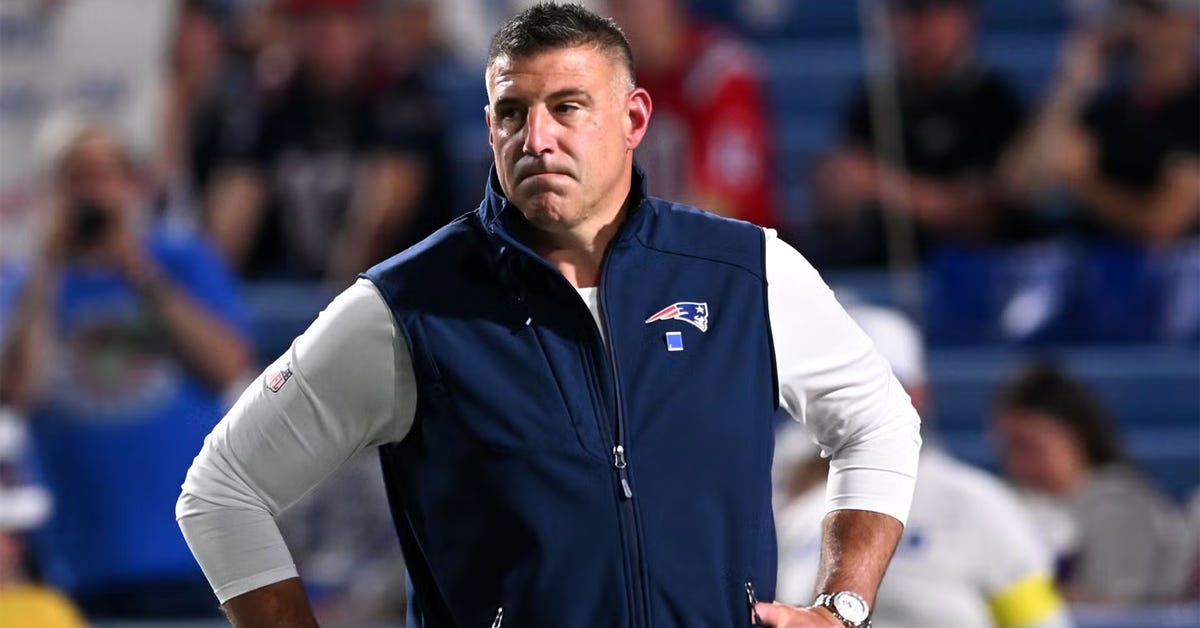
“Mike’s kind of an a--hole if you get to know him.” Tom Brady describes his former teammate, Mike Vrabel, succinctly. Sean Payton’s opponent this weekend is another descendant of the Bill Parcells coaching tree, spending his playing career with the most accomplished coach of all-time and fellow Parcells acolyte, Bill Belichick.
Playing 14 seasons in the NFL at linebacker, mostly with the New England Patriots, Vrabel spent his entire career winning. He won three Super Bowls with New England, while making first-team All-Pro in 2007, and becoming a finalist for defensive player of the year that same season. He was also occasionally used as a weapon at tight-end, catching 12 career receptions with 4 of those being touchdowns.
After retiring from an illustrious playing career, Vrabel dove headfirst into coaching. First at Ohio State coaching linebackers, then under Bill O’Brien’s Houston Texans staff as linebackers coach and eventual defensive coordinator for a season, before being hired by the Tennessee Titans as their head coach in 2018. In six years with the Titans, Vrabel led the team to a 54-45 record and an AFC Championship appearance for one of the more successful eras of Titans football since the early 2000s.
Following a messy divorce from Tennessee, Vrabel found himself back home as the head coach of the Patriots. In one season, he’s taken the team from finishing 4th in the AFC East to finishing as the number 2 seed in the AFC. It’s been a fast rise for a young Patriots team piloted by second-year quarterback and MVP favorite Drake Maye.
One of the fundamental ideals of Bill Belichick’s coaching philosophy is “Do Your Job,” the idea that every player should focus on their individual responsibility to fit into the whole. It’s reinforced the vaunted Patriot Way, which, as former Patriots Drew Bledsoe described to ESPN, “I think it’s just that simply no one player or group of players is bigger than the team or the organization.” It’s a foundational view on coaching that Vrabel also shares. But while many of Belichick’s former proteges have tried to emulate the Hall-of-Fame coach and failed (looking at you Eric Mangini), Vrabel’s coaching style is completely his own.
Vrabel is known not only for his tough love and intensity. As former Patriots and Titans cornerback Logan Ryan told Masslive about his time in Tennessee, “All of our best players, our highest paid players were being challenged. And they weren’t used to that, seeing all of their lowest plays. And that’s kind of embarrassing. So you don’t want to be on that tape.”
Compared to other coaches, Vrabel is as hands-on as it gets (see here, for instance). He’s competitive and is often seen directly running a drill where players have to block or tackle him. During a joint training camp practice with the Washington Commanders this past summer, Vrabel dove into a big multiple-player scuffle that resulted in him getting a bloody cut on his cheek. There’s video of him slapping on a blocking pad over his chest for 1-on-1 drills with players like rookie offensive lineman Will Campbell and defensive tackle Christian Barrimore, where Vrabel directly teaches technique.
“He’s right there with us. I think that player comes out in him,” Patriots tight end Hunter Henry told ESPN. “You have to love a coach that has competitive juices like us.”
What Vrabel does well, like all great coaches, is teach. He’s clear in his vision for the Patriots and the style of violent, physical football he wants them to play. As Patriots linebackers coach Mike Smith said to ESPN, “That’s the thing with Vrabel ... you know exactly how he feels. I just respect that part. There’s no hidden agenda. What you see is what you get.”
Vrabel has also stressed the importance of the relationship between the players, one thing that wasn’t always top of mind for Belichick. In training camp, Vrabel makes it a point for players to get to know each other’s stories. As Vrabel once said to ESPN, “We need [players] to put the team first, and we’re going to ask everybody to make tough decisions,” Vrabel said of his focus on connectivity. “Hopefully, the better you know somebody and understand who they’re playing for, and trying to support, the things going on outside of [football], there’s a lot of similarities, and I think the better it is to work with them.”
On gameday, Mike Vrabel has proven himself to be an excellent in-game tactician. Taking advantage of all of the rules available on the field to give himself an edge. One famous example from Vrabel’s time in Tennessee is a 2020 Wild Card matchup against his mentor, Bill Belichick, and the Patriots, where Vrabel intentionally took too many men on the field penalties to run out the clock and get the win.
The culture he created has had an immediate impact in New England. Time will tell if it will make New England Titletown once again. As Brady put it, “I think he’s toned down in his old age.”
The Ever-Evolving Offensive Wunderkind
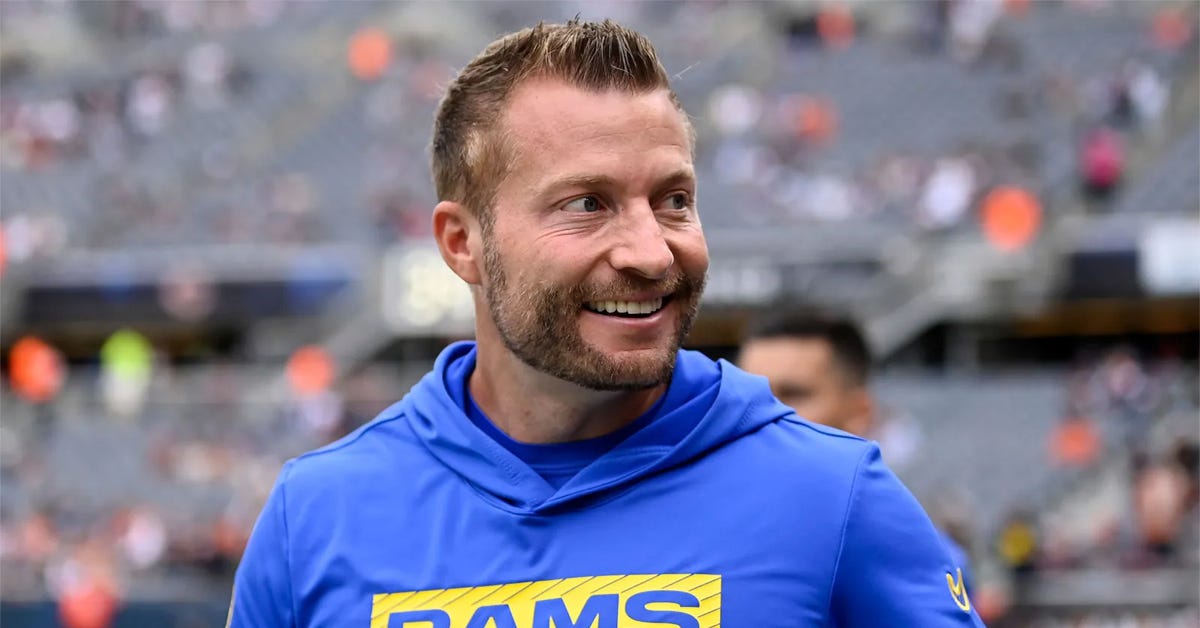
As Hall-of-Fame coach Bill Walsh once said, “A good leader is always learning.” Walsh led the San Francisco 49ers to three Super Bowls alongside 49ers Vice President and Director of Football Operations John McVay. Three decades later, McVay’s grandson would grow to embody Walsh’s words.
Since becoming the youngest head coach in the league at age 30 when he was hired by the Los Angeles Rams in 2017, Sean McVay has defined the modern NFL offense. In his first year in Los Angeles, he took a floundering Rams offense from one of the worst in the league to first with an offensive philosophy that relied on running multiple run and pass plays out of similar-looking formations.
He took the team to an NFC Championship in 2018 before their first Super Bowl victory in 2021. He’s ushered in the most successful era of Rams football of all-time, delivering a 92-57 record in the regular season over 9 years and a 10-5 playoff record with 7 playoff appearances. His success famously resulted in the Sean McVay effect, where assistant coaches on his staff were given head coaching opportunities because everyone wanted a piece of McVay’s scheme.
Aside from his offensive ingenuity, what those around him respected the most was his ability to communicate complicated ideas. Rams General Manager Les Snead described how McVay came across during his head coaching interview to The Ringer in 2018.
“In those first 10 minutes, he probably articulated [the offense so well] to myself, (and other Rams executives)—who I’ll quickly say could never coordinate an offense, or defense, or special teams, even though we’re in football—that I guarantee we could’ve run a few of his plays.”
Former Rams quarterback Jared Goff echoed the sentiment.
“The way he communicated. The way he made something that’s so complicated seem so simple. Right then, it was like, ‘Wow.’”
However, after winning the Super Bowl, McVay burnt out and almost quit coaching football in 2022. The Rams followed up their Super Bowl win with a 5-12 season due to a slew of injuries. “We were supportive of whatever decisions he wanted to make,” Rams’ president Kevin Demoff said to ESPN.
McVay said of the early successes to The Athletic, “As a result of that chase, there were some good times, but there were a lot of times that I became somebody that I don’t like.” Instead of walking away from the game, McVay “How Stella Got Her Groove Back-ed” himself. He focused on being present, enjoying the journey, and appreciating those around him. “He gives off a ton of energy in the building, and he’s the heartbeat of the way the organization goes, but he also benefits greatly from the energy that people put into him,” said Demoff. “I think that’s probably the one place where you see a little bit of a difference.”
“I think what you try to do a much better job of is enjoying the journey,” said McVay. “I don’t know that I always did that.”
Self-reflection is McVay’s superpower. He is a “good leader who is always learning.” Matthew Stafford speaks to that humility and self-reflection, saying earlier in the season, “I think the coolest thing is just the honesty we have we each other. Whether things go the way we want or not, it’s how can we fix them, how can we get better…I appreciate the hell out of it. Not always the case in this league.”
Aside from his coaching-style, McVay has evolved schematically. He took a shotgun-heavy, wide zone offensive scheme and transformed it into an offense that plays under center at the highest rate in the league. The 2026 Rams offense relies on a power running game, more 12 and 13 personnel (two or three tight ends on the field, respectively), condensed formations, and keeping the quarterback under center to make run and pass plays look identical.
The offensive approach led quarterback Matthew Stafford to an MVP-contending season, a dominant performance by wide receiver Puka Nakua, and has the Rams knocking on the door of their third Super Bowl appearance in 9 seasons.
At the heart of it all is an offensive genius who rediscovered himself through success and adversity. The coach who never stops evolving. “He’s also extremely into pouring into people and getting the best out of them,” said McVay’s former assistant coach Jimmy Lake, “and genuinely, authentically wants people to succeed around him.”
The Intellectual Defensive Innovator
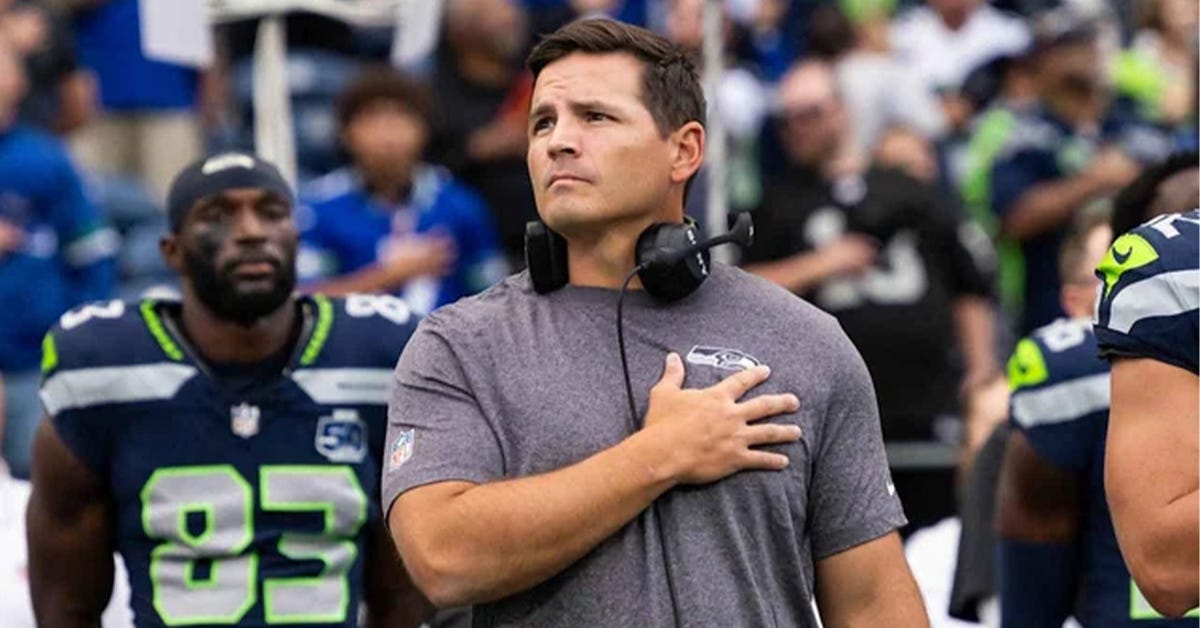
Devon Witherspoon describes his head coach as “Nerdy for sure, but in a good way.” Mike MacDonald’s meteoric rise from Michigan defensive coordinator to Seattle Seahawks head coach isn’t a surprise. MacDonald learned from the best throughout his career, which started as a graduate assistant for Mark Richt at Georgia before joining John Harbaugh’s Ravens in 2014 as an intern and rising the ranks to linebackers coach by 2020, then going to the University of Michigan as defensive coordinator under Jim Harbaugh, before coming back as defensive coordinator of the Ravens under John Harbaugh again. He’s made the rare Harbaugh to Harbaugh back to Harbaugh jump.
John Harbaugh describes MacDonald well.
“He’s a great guy, he’s a great coach. He’s very diligent. Yes, he’s smart, he’s thoughtful, but he’s fundamentally grounded, and he’s very diligent. Every single day, all he thinks about is ways to help the guys be as good as they can be or attack the offense that he’s going against.”
At a time when most defenses in the NFL emulate the Vic Fangio staple of using two-high safeties to eliminate big plays, MacDonald is pivoting to the next phase of defensive football. A cosmic gumbo of influences rooted in eliminating big plays while also stopping the run. Through simulated pressures and match coverages, MacDonald creates an illusion of pressure and complexity that most offenses struggle to decipher.
He’s the latest coach to come from John Harbaugh and the Ravens coaching tree, which emphasizes the development and growth of young coaches. As MacDonald describes his coaching-style to Richard Sherman, he’s rooted in “old school principles, new school methods.” That means combining relentless hard work, tough love, and accountability with analytics, data, science, and fun nature.
Within that is a certain intensity that emanates from MacDonald.
“It was communication, leadership, clarity ... that jumps off with Mike,” Seahawks GM John Schneider said to ESPN. “I had talked to several people that had interviewed him already and they were like, ‘Wait until you look in this guy’s eyes, man. He’s there. He’s present. He’s on it.’ And he was. Everybody in that room felt it.”
Much like McVay, what sets Mike MacDonald apart is his ability to teach complicated ideas in a way that sticks with his players. He makes sure that every defender understands what everyone else on the defense is doing, and even implements a naming convention for his plays that makes it easier for players to learn and recall.
Ravens cornerback Marlon Humphrey broke it down for ESPN:
“He’s doing a unique job. … I’ve kind of never experienced it…He’s really having everybody understand the whole philosophy of mainly just the group of coverages…So I think he’s done a really good job of kind of really helping us all be smarter, to where I know what the D-line’s doing. I also know what the linebacker is doing. I also know what the safety’s doing.”
Former Seahawks linebacker and current Dolphins linebacker Tyrel Dodson echoed that sentiment, telling ESPN, “I don’t think Coach knows how smart he is…People can be smart and you not understand them. He’s smart and he understands us, and he coaches it so well.”
MacDonald has reinvigorated a Seattle defense, taking it from one of the worst before his tenure to one of the top defenses in the league. Along with that, MacDonald has a clear vision of what offensive football he wants to play. And his firm belief in quarterback Sam Darnold has helped Darnold rise from reclamation project to leading one of the best offenses in the league.
One win away from Seattle’s first Super Bowl appearance since the 2015 heartbreak against the Patriots, MacDonald has shown that a little nerdiness might be what Seattle needs to bring home the Lombardi trophy.
What about the Coach as CEO type with Harbaugh and Tomlin? Its been a while since either has won, but it feels like there is some merit to the archtype
Sean Payton is a great coach and hall of famer but I think your former coach Andy Reid has gotta be the QB whisperer. McNabb, Garcia, Vick, Alex Smith and Mahomes. He made Kevin Kolb good! Perhaps Peyton has more of a personality to write about being brash and crass while Andy is more aw shucks I'll have a cheeseburger or I gotta do a better job. Not as much to take from quotes.
Fun read nonetheless!